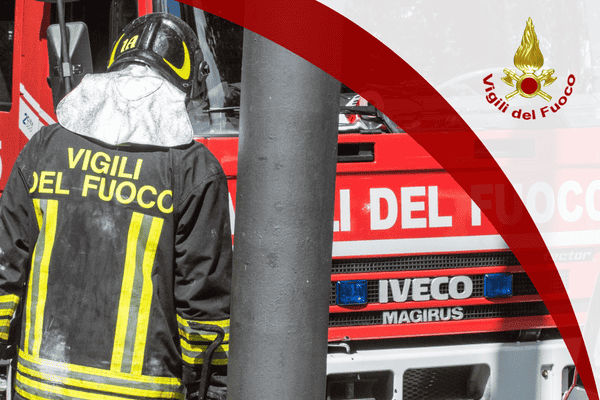
Fire brigade HSR elections: nationwide digital voting with 34,168 voters and certified results
Key results
- 34,168 eligible voters
- 17,269 voters participated
- Overall turnout: 50.54%
- Nationwide election distributed across multiple operational sites
- Access via Single Sign-On (SSO) from the institutional portal
- Ballots with multiple preferences and voter limits
- Real-time turnout tracking by command and location
- Automatically certified results and reports
The challenge: managing fire brigade HSR elections on a national scale
Fire brigade HSR elections present particularly complex organizational characteristics. The Italian National Fire Brigade is a distributed structure, with operational units across the entire territory and personnel with highly diverse logistical needs.
The main initial challenges included:
- Coordinating a nationwide multi-site election
- Ensuring secure and consistent voter access
- Managing complex ballots with multiple preferences
- Guaranteeing traceability and certification of operations
In the case of fire brigade HSR elections, organizational complexity reaches an even higher level compared to other contexts. This is a nationwide election involving operational personnel working shifts, distributed across different territorial units, and requiring non-uniform access methods.
In such a scenario, ensuring participation, vote accuracy, and operational traceability becomes a fundamental governance requirement. A system capable of adapting to these operational dynamics was therefore essential.
Additionally, HSR elections are governed by Legislative Decree 81/2008, which mandates the presence of workplace safety representatives and defines election procedures. This further increases the importance of adopting a reliable and verifiable voting process.
According to data from INAIL, the role of Workers’ Safety Representatives is central to accident prevention and directly impacts workplace safety outcomes. The quality of the election process therefore influences the quality of worker representation itself.
The solution: SSO integration to manage fire brigade HSR elections
To effectively manage the election of Workers’ Safety Representatives for the National Fire Brigade, a digital platform designed for complex, distributed, and large-scale voting environments was adopted: Eligo.
The infrastructure was directly integrated into the organization’s existing systems, ensuring operational continuity and simple access for all participants.
From an organizational standpoint, the back office was responsible for preparing a reliable voting environment that could be updated in real time and aligned with the distributed structure of the National Fire Brigade.
This included:
- Configuration of election ballots
- Dynamic management of voter eligibility lists
- Continuous monitoring of voting progress
The team configured the voting environment considering the complexity of the election: more than 34,000 eligible voters distributed nationwide, each with different operational requirements.
Structured ballots were created using multiple-preference systems and voter constraints to ensure compliance with the specific rules governing fire brigade HSR elections at each location.
Nationwide digital management of fire brigade HSR elections
- Complete digital management of elections at national scale
- Integration with internal systems for simple and immediate access
- Customized ballots by location with specific rules and limits
- Continuous monitoring of turnout and voting progress
- Scalable infrastructure designed for more than 34,000 distributed voters
The introduction of automatic voting receipt emails reinforced transparency and process clarity.
The solution was structured around three pillars:
- Governance control: segmentation of voters and conditional ballot access
- Process management: centralized configuration of electoral events
- Customization: tailored communication flows and voting experience
From a technical standpoint, the system ensured anonymization of voting preferences at client level, separation between identity and vote, uniqueness of the vote, and auditability through logged operations and signed reports.
Eligo’s security and compliance framework aligns with ISO 27001, ISO 27017, ISO 27018. Voting preferences are anonymized and encrypted at the moment of submission, ensuring no traceability between voter and vote.
This architecture supports large scale university online voting scenarios with high governance complexity.
A guided voting workflow designed for operational simplicity
At the voter level, the voting process was designed to be extremely linear and guided, minimizing the possibility of errors even in a complex environment such as fire brigade HSR elections.
Access occurred directly from the restricted area of the institutional portal, without requiring additional credentials or installations.
Once inside the platform, voters were guided through a clear and sequential workflow:
- Access to the reserved area: the voter logs into the institutional portal and accesses their personal area using credentials via Single Sign-On.
- Access to the voting section: from their personal area, the voter selects the active election related to the fire brigade HSR elections.
- Ballot display: the system automatically displays the correct ballot based on the voter’s profile and assigned location.
- Preference selection: the voter expresses their vote by selecting candidates or lists according to the defined limits.
- Vote confirmation: the voter explicitly confirms their choices through a second validation step.
This double-confirmation mechanism played a key role in ensuring awareness and correctness in vote submission.
The entire system was designed to be accessible from any device, allowing personnel to participate in fire brigade HSR elections regardless of their operational site or working context. This significantly increased inclusivity, efficiency, and alignment with real organizational needs.
Summary Data
| Indicator | Value |
| Eligible voters | 34,168 |
| Total voters | 17,269 |
| Average national turnout | 50.54% |
| Maximum turnout recorded | >90% |
| Minimum turnout recorded | ~1–6% |
| Territorial distribution | Nationwide (Italy), multi-site |
| Voting access | SSO via institutional portal |
| Devices used | PC, tablet, smartphone |
Participant feedback
Fire brigade HSR elections were not distinguished only by operational results but also by the user experience perceived by participants.
Collected feedback clearly highlights two key elements:
- Ease of use
- System immediacy
Several participants emphasized the platform’s simplicity, even within a complex and distributed operational environment such as the National Fire Brigade.
“I found the application interface very clear and immediate. Excellent work.”
Enzo Ciarleglio, National Fire Brigade
Other users explicitly highlighted the intuitive nature of the system, confirming the quality of the voting experience during the fire brigade HSR elections:
“I would like to express very positive feedback: the application proved to be highly user-friendly and intuitive.”
Ing. Roberto Melmeluzzi, Fire Safety Inspector – Central Emergency Directorate
Additional feedback focused on the overall practicality of the system, a critical factor in an election process involving thousands of participants:
“I would like to take the opportunity of the HSR elections to congratulate you on the practicality and intuitiveness of the provided application.”
Dr. Achille Antenucci, Deputy Technical Scientific Director – National Fire Brigade
These testimonials confirm that, in fire brigade HSR elections, the design of a clear and guided user experience had a direct impact on participation levels and on the overall quality of the electoral process.
The client: Italian National Fire Brigade
The Italian National Fire Brigade represents one of the main operational institutions of the Italian State, with a widespread presence across the territory and a structured organization involving thousands of professionals engaged daily in high-responsibility activities.
In this context, the management of fire brigade HSR elections plays a strategic role, as it directly concerns worker representation in matters of safety.
The introduction of a digital system for fire brigade HSR elections represented a significant step toward greater organizational efficiency and more accessible participation.
The possibility to vote from any location and device helped reduce logistical barriers, while centralized process control ensured greater transparency and operational traceability.
This project fits into a broader path of innovation and digital transformation within public administration, demonstrating how even highly complex organizations can modernize their decision-making processes without compromising:
- Security
- Reliability
- Regulatory compliance